The intention economy: The cost of direct mail is what saves it from AI slop
Why direct mail resists AI slop: its cost forces marketers to think before they send. I explain the intention economy and how to apply it to every channel.


Direct mail is about as old school as marketing gets, and in a world of AI slop, that's exactly what makes it stand out. Where web ads are relatively cheap, flexible, and easily cancelled or updated if something goes wrong, mail is expensive, takes weeks to produce, and worst of all, a bad decision can't be undone.
These aspects of direct mail get filed away as the channel's weaknesses, and often become reasons to test it later, or not at all. But that expense has a side effect worth paying attention to: it forces intentionality. Because it costs more, we treat it differently; we’re less likely to thoughtlessly hand it off to AI. And I think that teaches us something about how we're engaging with all our LLM tools right now: we're not just handing off our thinking, we're handing off our intention, and too often we stop caring about what actually goes out the door.
Why direct mail's cost forces better targeting
When sending costs nearly nothing, there's no reason to think hard before you launch.
We'd never say it out loud, but let's be honest, this thinking has crept into a lot of outreach over the last few months. It's the same spray-and-pray we all know and roll our eyes at, but now on steroids thanks to AI. And for digital it almost seems justifiable: if an email campaign misses, the financial penalty is relatively negligible, so the rational move is volume. Fire everything and see what sticks, right?
Mail won't let you do that. When each piece costs real money to send — orders of magnitude more than a digital impression — you feel actual pressure to answer the basic questions: who you're sending to, whether the list is right, what you're actually saying, whether the timing makes sense. You know, the questions we all know we're supposed to answer before we write a single word of copy. The economics aren't limitations, they're a forcing function to do better work, and it's why mail campaigns tend to be thought through in a way that email campaigns often aren't.
What this looked like for us
Last month we launched a self-serve portal where you can directly pull consumer data from the Faraday Identity Graph (FIG), and we wanted to announce it with a postcard, something we hadn't tried before. What I didn't expect was how different the creative process would be from our standard digital ad rollouts.
Our first version was built mostly with AI (let's be honest, who isn't doing that today). AI helped pick who we'd send it to, wrote most of the copy, and drafted the design. We had the whole thing mocked up in a day. If this had been an email, I'd probably have glanced at it for two minutes, and, noting that the cost to send would be negligible, said "sure, let's try it." But something at the back of my head kept reminding me that every one of these postcards was going to cost us real money, so I actually looked closer.
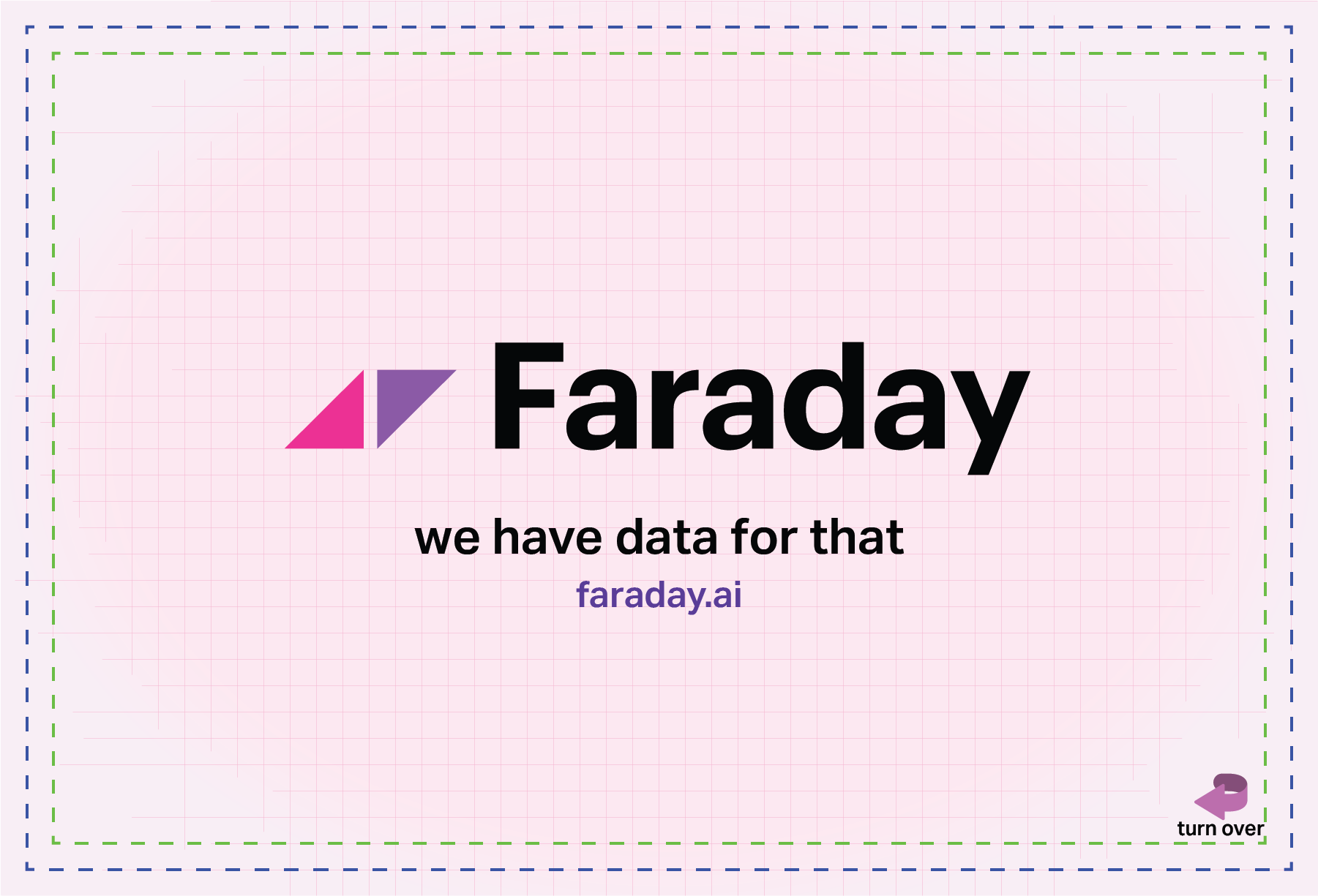
This is the original, it wasn't bad. It met every requirement I’d given. But it was generic and frankly it wasn't something I'd respond to myself. We'd made something, fast. But with a little more intention, we could make something great. So we went back to the drawing board on all of it: the list, the message, and even what we wanted the piece to feel like. And when we weren’t sure what the best path was, we didn’t hand it off to Claude, we went to the actual experts in our corner, our fantastic direct mail provider Lob, who walked us through the details that convert a campaign from acceptable to exceptional (like knowing that 6x9 postcards tend to get a better response than 4x6, who knew!?).

Round 2 landed on something highly personal and friendly: a casual, direct note from our Head of Sales paired with a classic VT postcard aesthetic (covered bridge and all). It was designed to feel like what makes postcards fun in the first place: a warm note from someone who was thinking of you. In this case, your old friend Dave (who happened to have an easy yes to save you some money).
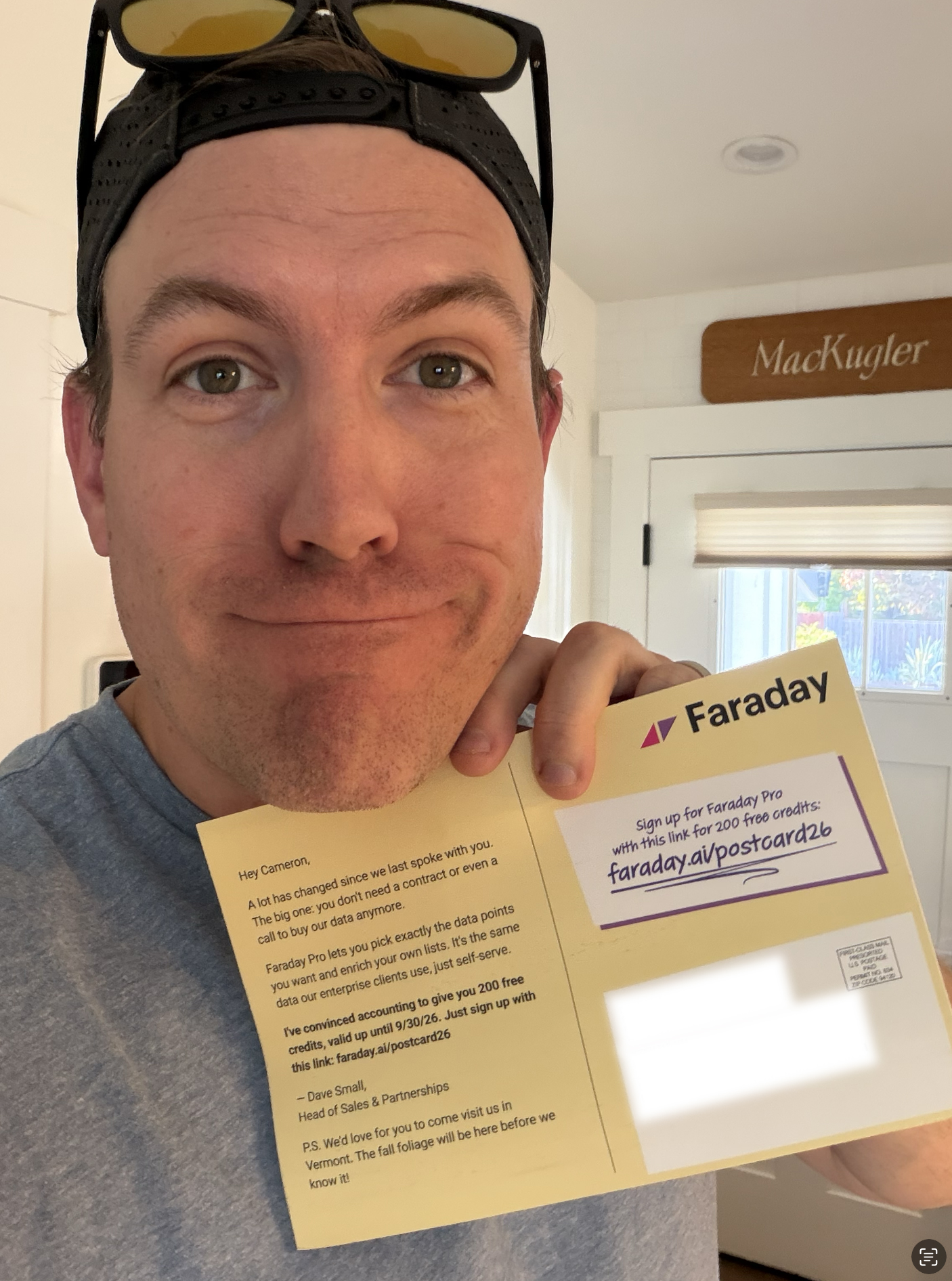
(That’s one happy customer)
What the research actually shows
But it’s not just that we marketers get a warm, fuzzy feeling when we send a nice, intentional direct mail. The data shows this actually impacts the bottom line.
I was on a panel with Lob, the USPS and SimpliSafe earlier this month, digging into their 2026 State of Direct Mail research, and the numbers make the case better than I can. Nine in ten people say relevant, personalized mail is what moves them to act. Two-thirds now say AI has made them more skeptical of digital ads, while most are comfortable with AI in their mail — as long as it's making things more relevant rather than just making more of them. And the households under the most financial pressure, the ones you'd assume have tuned marketing out entirely, are the most likely to act on mail and the most willing to try a brand they've never bought from who connected with them through direct mail.
People aren't reacting to the technology. They're reacting to whether anyone was paying attention.
The trap is avoidable
Look at how we're all working right now. How often do you find yourself just conversing with Claude, passing prompts back and forth only to realize you could have written it yourself in 20 minutes? We've got more tools than we have problems to solve.
It's not a new take that we're outsourcing our thinking to AI — but I'd argue it's not just our thinking we're giving up. It's our intention.
For years marketers have been optimizing for attention — impressions, clicks, time on page, all the ways we measure how much of someone's day we managed to capture — but today we need to reorient. Suddenly, as we're all managing teams of autonomous (and somewhat competent) agents, we don't just need to optimize for the attention of the lead, but for our own intention. When we're able to run 100 campaigns at once, the most important item to budget becomes focus. This is what I call the intention economy, and it's just as critical to understand as the attention economy.
And this is where mail is instructive, because it's a channel where the option to stop paying attention never felt like an option at all. You can generate a hundred versions of a mailer in a minute; you still have to pay to put each one in a mailbox. The bill arrives whether an AI wrote the copy or you did, but the leads might not.
Where that leaves the rest of your marketing
The useful thing about a constraint is that you can adopt it on purpose. Sure, postage might be the specific thing that makes you ask the right questions on your direct mail campaign — but those questions don't become less true in channels where nobody's forcing you to think about them. You don't need a stamp to stop spraying and praying; you just need to hold your digital channels to the exact same standard.
We need to take the reins of our campaigns and stop letting the tools, or some false sense of “efficiency” dictate our standards. The tools can scale our output, but the intention still has to come from us.
Robin Spencer
Robin Spencer is Faraday’s COO, leading all of our client-facing teams—from sales to customer success. Her mission is simple: help consumer businesses uncover where data can meaningfully improve (and profitably accelerate) the customer journey. Robin brings experience from Accenture, Google, and Clearbit (acquired by HubSpot), where she focused on using data to drive real, measurable business outcomes. When she’s not geeking out about data and operational strategy, you’ll find her tending her cut-flower garden, knee-deep in a creative project, or wandering in the woods nearby.

Ready for easy AI?
Skip the ML struggle and focus on your downstream application. We have built-in demographic data so you can get started with just your PII.